Bobby Abreu announces retirement
After 18 seasons with the Phillies, Yankees, Angels, Astros, Dodgers and Mets, Bobby Abreu is retiring.

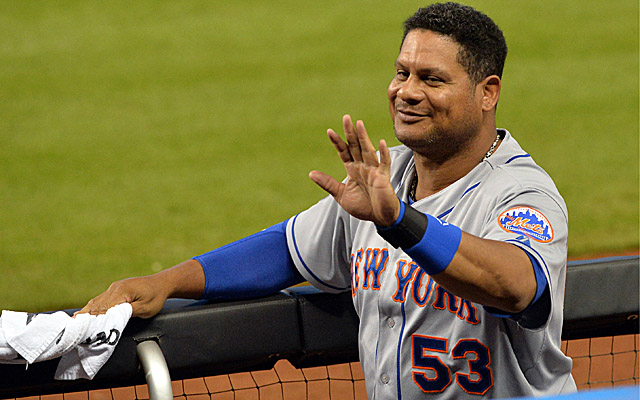
After playing in parts of 18 different seasons and for six different teams, Bobby Abreu has announced his retirement.
Today @BobKellyAbreu announces his retirement from the game of baseball. #Mets pic.twitter.com/PNJ8XjqK4m
— New York Mets (@Mets) September 26, 2014
Abreu, 40, appeared in 2,423 games in his career. Over the course of it, he hit .291/.395/.475 (128 OPS+) with 574 doubles, 288 homers, 1363 RBI, 1453 runs and 400 stolen bases. He collected 2,469 hits.
Likely due to not being a huge homer guy in a ridiculously-high homer era for much of his career, Abreu is a very underrated player, historically-speaking. He only made two All-Star Games and never finished in the top 10 of MVP voting.
Abreu ranks in the top 100 in baseball history in the following: On-base percentage (78th), runs (79th), doubles (21st), RBI (87th), walks (20th), steals (73rd), total bases (85th), extra-base hits (58th), times on base (46th), sac flies (76th) and offensive WAR (92nd). He's 103rd in hits, too.
Most remembered for his nine seasons with the Phillies, Abreu also put together good seasons with the Yankees and Angels. He hung on late with the Dodgers and Mets while beginning his career with the Astros.
Abreu's biggest strengths were his plate discipline and pitch recognition skills. A great example? In 2004, Abreu only swung at 9.7 percent of the pitches he saw outside the strike zone. To put this in perspective, the MLB leader in 2014 in this category is Matt Carpenter, swinging at 19.4 percent of the pitches he sees outside the zone. Only 19 guys are below 25 percent in all of baseball in 2014. Between 2002-09, Abreu never topped 16.6 percent.
This helped Abreu work opposing pitchers. Throughout his career, he averaged 4.28 pitches per plate appearance while the league average was 3.77.
Given his baserunning skills and the walks contributing to Abreu's excellent on-base percentage, much of his value derived from his pitch recognition.
As is customary when a career with Abreu's longevity comes to an end, we have to talk Hall of Fame. He probably won't make it and will likely fall of the ballot after his first attempt, but this isn't to denigrate his career. It's been great.
In fact, I can see some new-school thinkers making a case that he merits some discussion. The JAWS system shows him below the current Hall of Fame average, but around names like Dave Winfield and Vladimir Guerrero.
So farewell, Mr. Abreu. A tip of the cap for a very admirable career.